
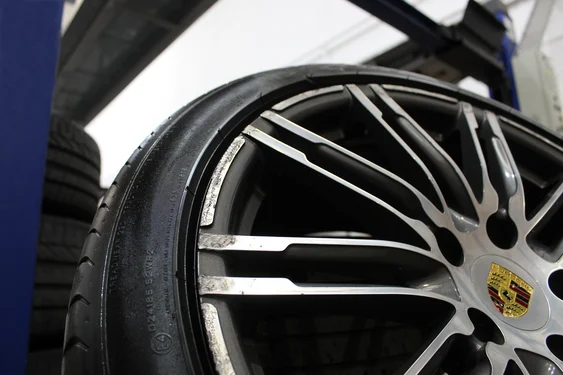

BVLRA fair wear and tear standards for alloy wheels
For wheels, the BVRLA’s standard is specific. To pass inspection, your alloy wheels must not have:
- Dents or holes in the rims or trims
- Scuffs longer than 50mm on any wheel
- Damage to wheel spokes or alloy hubs
- A partially or fully discharged inflation canister (where one is fitted)
- Damage to the spare wheel (and the spare must be correctly stored)
Tyres are inspected to the same standard. Each tyre must be of the correct type, class, size and speed rating for the vehicle, must meet UK legal requirements for safe driving and mustn’t show any damage to sidewalls or tread.
Inspecting your lease car wheels before return
The biggest mistake most drivers make with lease-return vehicle/wheel inspections is leaving them to the final few days before the handover. At this point, you have no time or opportunity to repair anything, meaning the lease company charges their inflated ‘industry standard’ price.
We’d recommend doing your own inspection three weeks before the return date, as this gives you enough time to book any repair work without rushing. Our blog post on the first signs of alloy wheel damage is a useful starting point if you’re not sure what you’re looking for.
Three weeks gives you a comfortable window: a few days to assess, a few days to get quotes and plenty of time left for a specialist to repair, refinish and return your wheels. If you’re using a mobile wheel repair service that comes to your home or workplace, the turnaround is even faster, as most cosmetic repairs are done within hours.

Wheel repair options before lease return
There are a few different wheel repair options available before you return your lease vehicle. The right approach depends on the nature of damage, the severity and how much time you have available:
- Scuff/cosmetic repair – For the most common kerbed alloy and scuffed-rim cases, a cosmetic repair restores the original finish without the wheel needing to leave the car. Mobile alloy wheel refurbishment is ideal here.
- Diamond cut wheel repair – Diamond-cut repair requires lathe work to re-cut the face of the wheel and a fresh lacquer. This can also be done via a mobile alloy wheel repair van, like the DA Techs fleet. Read more on our diamond-cut alloy repair page.
- Buckled, cracked, or corroded wheels – Pothole damage and serious kerb impacts can leave wheels buckled or cracked, and a leasing company will class either as chargeable damage or full replacement. In many cases the wheel can be straightened or welded back to safe spec in a workshop, far cheaper than replacement. See options for damaged alloy wheels.
Alloy wheel repair with DA Techs
At DA Techs, we’re the experts when it comes to all things alloy wheel repair. We have plenty of experience in alloy wheel repair and replacement, and we know exactly what they’ll be looking for when you hand your vehicle back following a leasing period.
We’ll tell you whether your wheels are likely to meet the required standard, and even perform the necessary repairs if they fall short.